Our Mission
Our mission is to preserve ʻōiwi identity through moʻolelo and aloha ʻāina.
Our Story
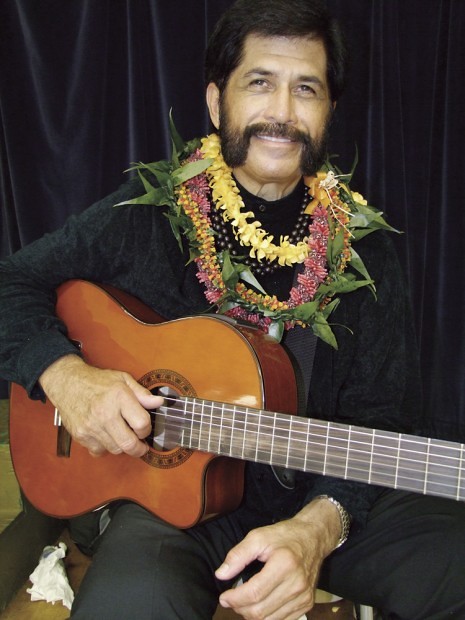
Na Kiaʻi began with a long held wish of my father, Palani Vaughan, dating back to 1997.
My father was a singer, songwriter, historian, educator, and deeply respected member of the Native Hawaiian community. He dedicated much of his life to serving our lāhui and believed deeply in our responsibility to care for our people, our culture, our history, and our ʻāina.
For many years, he carried the wish to establish a nonprofit that could serve our community in meaningful ways. But his life was full. He cared for his parents, his children, and his grandchildren while continuing his work as an artist, teacher, historian, and servant of our people. He never had the opportunity to fully realize that wish.
When my father passed away in December of 2016, I found myself carrying something that had been part of his life for many years.
I spent much of my childhood with him, traveling and performing alongside him, listening to his stories, and learning from the way he lived. Through those experiences, he planted in me an understanding of what it means to serve, to honor our kūpuna, and to care for the things that make us who we are.
Over time, I began to understand that perhaps this was something I was meant to continue.
I resurrected Na Kiaʻi, preserved the name he had chosen, and began discovering what it could become.
My own journey has always been deeply rooted in hula. I began hula at the age of four, and in 2006, I completed my ʻūniki and became a Kumu Hula. That same year, I established Hālau Hula Ka Lehua Tuahine in Mānoa.
Our name carries the memory of that place. Ka Lehua Tuahine means the lehua blossom nourished by the Tuahine rain, the rain of Mānoa.
Over the years, our hālau moved from Mānoa to Kalihi and eventually to St. Andrew’s Schools in downtown Honolulu. Each place became part of our journey, but I continued to long for a way to reconnect with Mānoa, the place where our hālau first took root.
Years later, we were given an opportunity for a new home near Kona and Piʻikoi Streets, in the Kalia area, on lands once known as Kukuluaeʻo.
It was there that I began asking a different question.
Not simply, “What can this place provide for us?”
But, “What does this ʻāina need from us?”
That question led me to explore the history of the ʻāina and, eventually, to follow the wai.
As I traced the water mauka, I discovered a connection that led back toward Punahou and Mānoa.
Mānoa, where our hālau began.
Mānoa, whose rain is carried in our name.
Mānoa, the place I had prayed for years to reconnect with.
And then came the realization that perhaps we had never truly been disconnected.
The connection was there all along, flowing through the wai.
The water remembered. The ʻāina remembered.
In following the wai, we had found our way back into the embrace of Mānoa in a way I never could have anticipated.
That discovery helped me understand more clearly what Na Kiaʻi could become.